

 2025-01-21
Increase resources to support food recovery and charitable donations
The Food Commons Foundation has submitted recommendations for the 2025/26 fiscal budget public consultation, focusing on creating a sustainable society through enhanced support for food recovery and charitable donations. The suggestions aim to address current economic challenges, reduce food waste, and raise public awareness about the importance of food conservation.
Recommendations Overview
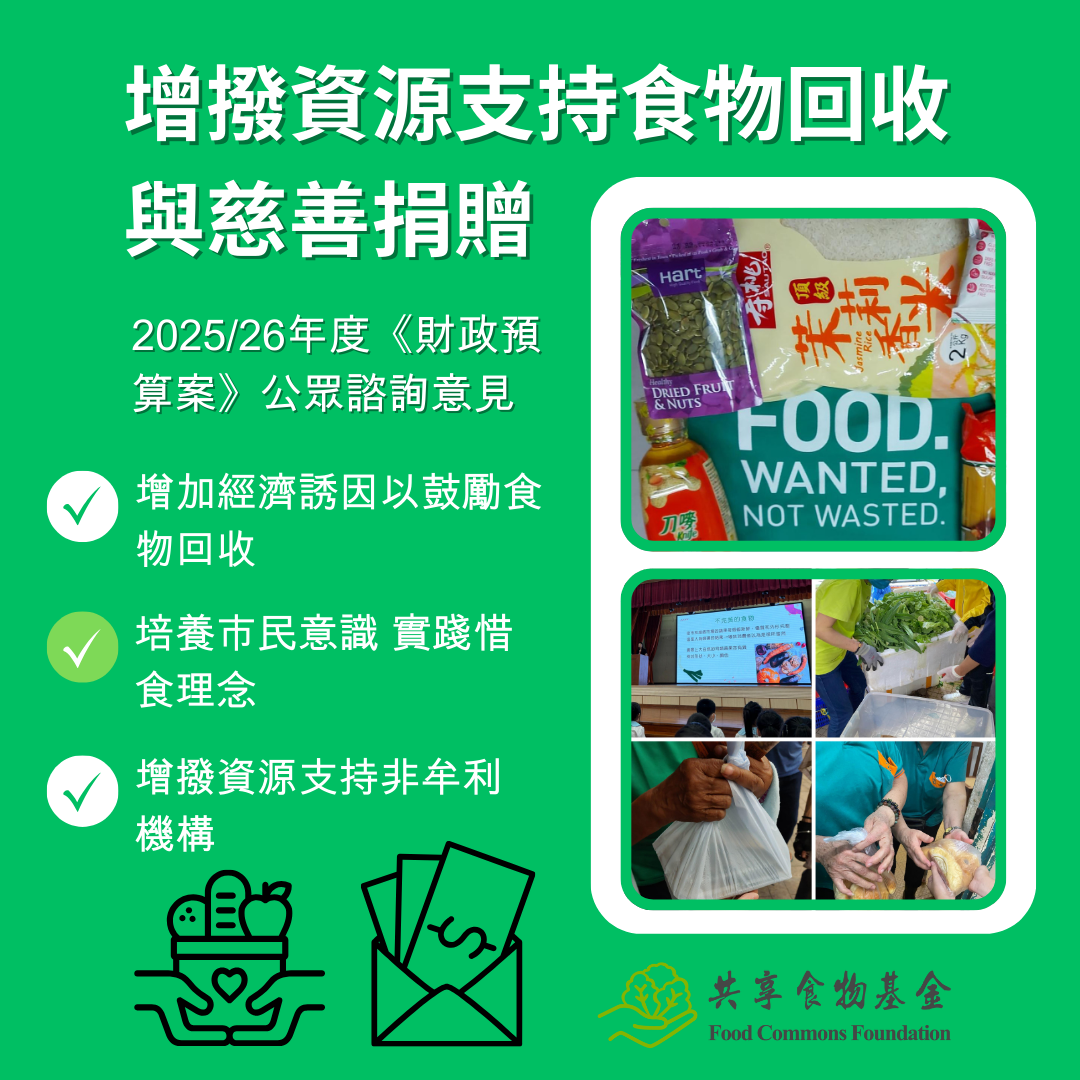
1. Increase Economic Incentives for Food Recovery
- Tax Deductions for Food Donations: It is proposed that the government offer tax incentives to wholesalers, retailers, and restaurants that donate food that is still consumable but nearing expiration. This approach aims to reduce food waste and support social welfare. The initiative could draw inspiration from similar policies in the United States, establishing clear tax standards and simplifying application processes to encourage more businesses to participate. Regular promotional activities would also be held to enhance awareness among companies.
- Expand Food Waste Recycling Programs: The existing food waste recycling initiatives should be expanded to provide free point-to-point collection services for a wider range of public and private organizations, thereby improving overall recycling efficiency. Increasing collection frequency and extending services to small businesses and residential areas, along with providing necessary equipment and training, would facilitate effective food waste management.
2. Cultivate Public Awareness of Food Conservation
- Education in Schools and Communities: The government is encouraged to allocate funds for primary and secondary schools to conduct food recovery activities and train teachers to educate students on valuing food. Community-level awareness campaigns should also be initiated, including a city-wide "Food Conservation Education Month" involving schools, community organizations, and businesses. Interactive activities like workshops would be designed to boost public engagement.
- Promote Eco-Friendly Restaurants: Restaurants should be encouraged to use local and seasonal ingredients, design menus that minimize waste, and offer personalized meal options. Establishing "Eco-Friendly Restaurant Certification" standards with financial support for compliant establishments would motivate more restaurants to adopt sustainable practices.
- Enhance Funding for Food Conservation Education: An increase in funding from the Environmental and Nature Conservation Fund for food conservation education programs is recommended. This funding would support non-profit organizations in conducting educational initiatives within communities, ensuring diverse groups benefit from food conservation education.
3. Increase Resources for Non-Profit Organizations
Additional funding should be directed towards non-profit organizations so they can effectively implement food conservation education and recovery programs within communities. This will help ensure that edible food is not wasted while also benefiting those in need. Special funding should also support innovative community projects aimed at fostering mutual assistance. The Food Commons Foundation hopes that the government will seriously consider these recommendations to help Hong Kong move towards a greener and more sustainable future.